Tuesday, February 21, 2012

The Next Step.... The Fuel of the Future!!!!

  • Each year around 77 million cars are produced worldwide whit china taking the lead with 18 million units a year.
  •  By the year 2007 there were around 806 million cars & light trucks on the road on the road (If kept bumper to bumper this is enough to circle the globe a 100 times) 
  • These 806 million cars consume around 260 billion gallons of petrol and diesel yearly.


This in turn would mean that a quarter of the oil ever consumed on earth was done so in the last 15 -20 years. All these facts can’t help but beg one question….


How long do you think it will all last??


For many years now the debate has been ongoing as to what the future will hold for us. And in terms of automotive industry what will we be using to power our cars. I made it a personal goal to explore the options open to us. Now these alternatives may be either low emission or emission free. But one type of fuel stands a good chance to fight for prestigious award of 0% pollution…….


The Fuel of the Future….


The answer is...

HYDROGEN..

I mean think about it. Hydrogen is the single most abundant type of resource (if you are willing to go that extra mile to call it a resource) not in the world, in the whole UNIVERSE!!!. Our biggest star the Sun uses hydrogen in nuclear fusion to produce massive amounts of energy and helium as a byproduct. Here on earth hydrogen can react with oxygen to give out the same amount of energy as petrol with the only waste being water. I mean it’s the best possible thing right…


However hydrogen does have one drawback. Although hydrogen is a renewable resource it is not available in its pure form. In other words hydrogen is always available combined with other elements which would mean that to get to hydrogen you actually have to spend energy on retrieving pure hydrogen.


OK since we got that cleared currently there are 2 ways in which hydrogen can be used to power cars. One would be to use the normal petrol engines with a few changes (YES…we can do that…..YAY…this would mean that we can preserve most of the experience of a hunky petrol engine) and also fuel cell driven cars, which are basically electric cars (BORING!!!!!!.... seriously guys there is a bigger problem at hand, so bear with me). But you see although hydrogen can be used in cars very effectively to power them, there are 2 problems with it.


  1. Manufacturing
  2. Storage & Distribution


Manufacturing.

In terms of manufacturing the usual process for hydrogen manufacturing would be electrolysis. This involves the passing of an electric current through water. This process produces hydrogen at one end and oxygen at the other. However there is a drawback with this process as well. The process of electrolysis uses electricity. Which has to be taken off the electricity grids. As of today most of the power generated is through the use of fossil fuels. So in using hydrogen there is still ascertain amount of green house gas emissions taking place. The ideal solution for this would be to switch to renewable sources for power generation such as Geo Thermal, hydro electric, solar or wind as quickly as possible. Or even switch to hydrogen power plants ( I’m not very sure about the possibilities of this)


Storage & Distribution

Hydrogen unlike petrol is a gas. (DUHH!!!.. yeah I know.. I said that to make a point so listen up) so you can’t use pump to move the hydrogen from one place to another you actually need a pressure difference (a high pressure to low pressure scenario). Therefore hydrogen has to be stored under pressure.

It terms of transport for a few kilos of hydrogen it can be transported in gas tanks. But for commercial volumes hydrogen has to be converted to its liquid form which means it has to be maintained at a very very very low temperature…. And that is a hard thing to do. So the only available solution is to produce the hydrogen on site on demand. Eg: When you pull up into a fuelling station to fuel your car you usually ask for a certain amount of fuel right. So the hydrogen actually has to be produced by the dispenser at that moment itself, thereby eliminating many of the costs involved in it.


So if the technology is readily available to use and produce hydrogen why isn’t it being used already??


For the answer we have to move back to the 1940’s


Fueling Stations and mass car production both evolved together. So over decades the safety the procedures the infrastructure etc has evolved solely to support the distribution of petrol & diesel. So obviously the change to hydrogen cannot happen overnight. Petrol cars and Fueling Stations both evolved together.


In the case of Hydrogen. It’s like a chicken and egg scenario, both have to evolve together. So car manufacturers have to start producing hydrogen driven cars as well as Fueling Stations should start selling hydrogen.


All that is fine. But there is a bigger question bothering me.

What does the Future hold for the Fuel of the Future??


The BMW Hydrogen Engine


Note: Feel free to leave comments on what you think might happen in the future.

Wednesday, February 15, 2012

The Power : Weight Ratio

2 Weeks of waiting and we are back….

Up to now I have been going on and on about some of the cars, their breed and the technology that caught my eye. I would go on and on about what the car can do, what it cant do, what it would be better off doing and you know blah blah blah blah blah blah. Now… Change of Pace..

Heres what I have in mind….. :)

This time im going to go short and sweet. Short being the article and sweet being the the subject of the article…. My choice for this would be something which has come to become a fundamental factor when it comes to the motoring world. The Power to Weight Ratio

Okkk… now what exactly is this power to weight ratio…

The best place to begin to explain this would be to start off by explaining what power really is. Power in simple terms is the … erm… well… the power output of the engine. Its usually measured in horse powers, which basically equates the power of the engine to the mode of transportation at the time when the petrol engine was first invented, The Horse and cart.

So 1 Horse Power = 1 horse n cart

2 Horsepower = 2 horse n cart

Modern cars have horsepower ranges goin from 40 to well over 1000 horse powers and all produced from a petrol engine.

So where did it all start??

In Germany 1885.

The Benz Tricycle

The first ever petrol engine was put on the Benz Tricycle by inventor Karl Benz can be considered as the first motor car. It just consisted of a 3 wheeled bike like structure with a petrol engine stuffed into the back. It was first driven over a long distance by his wife when she went off with her daughter without telling Karl to see relatives who lived 2 towns away.

Yeah Yeah the first person to properly drive the first car was female...Thankfully its not a well known fact…or we’ll never hear the end of it.

Specifications

Engine: 1 cylinder, 1.0 litre, 1 horse power.

Top Speed: 8mph (12 kmph)


So over the years engines got bigger and bigger due to one reason. The bigger the engine the greater the power. It works like this

High Capacity cylinder = more fuel air mixture can be input = larger explosion = MORE POWER

This moved onto the launch of the first purpose built race cars. The engines kept bigger and bigger until they reached their most massive…………… until………….. they came up what is considered to be the god of race cars.

The Napier Railton.

Built in 1933 for land speed record breaking drive John Cobb’s the Napier Railton was powered by an airplane engine. There were 2 reasons for the use of the aero plane engines. One was that many of the car companies at the time were forced to build airplane engines to power the World War 1 air craft’s. So the left over’s after the war came in handy for Cobb’s. Obviously the byproduct of an engine made to do dogfights in mid air was well, sheer amounts of power that the enginecould generate. It was TERRIFIC for any race car driver.

Engine: Napier Lion, W12, 23 Litre, over 500 hp

Top Speed: 168 mph (270kmph)


This car holds the all time, life time speed record at the brooklyn race track (now shut down) of 143.4 mph (230 kmph)all the way back IN 1935 :O .. I mean 230 kmph in 1935….Simply austounding.


However soon after the race car associations somehow put together rules banning the use of aircraft engines in cars. Race car builders were made to focus on building lighter smaller engine cars with more power. Also due to the sheer number of casualties regulations forced race car builders to build cars which are more capable of taking corners and handling rather than just sheer brutal speed.

And here was one of the turning points away from power.


A way to increase your overall performance and stability was to reduce the weight. Even though the engine power was kept constant, the reducing of the weight meant that better performance and handling capabilities were available to the drivers. Many modern cars of the days, best example McLaren MP4-12C, SSC Aero are built with the whole weight reduction point in mind. I mean these cars were pretty much OBSESSED with weight reduction. The McLaren MP4-12C charred off kilos every where it possible could. The SSC Aero on the other hand removed comforts like the air conditioning and even the radio to boost performance.


Another reason for the power measurement to go out of hand was because as speed increase power tends to turn into a more exponential figure

You see as cars go faster and faster the more obstacles it meets to its motion such as drag force etc. So say I take the example of the Bugatti Veyron. All it needs to achieve 140 kmph is only about 270 horse powers but to reach its top speed of 400 kmph . It needs 1000 horse powers. So in essence to travel from 240 to 400 kmph which is an extra 160 kmph the Bugatti needs 730 horse powers. :O. I mean compare the figures. You’ll see for yourself just how much more power it needs to go fast. So that really puts the power measurement out of line.


So as you can see from what I explained above power really cannot be the measurement that can be used when measuring the actual capabilities of the car. Hence began the use of the Power to Weight ratio


The power to weight ratio uses the units of HorsePowers/Kg. So it basically looks at how much of horse power is produced for every tonne in a car.

Now this number can be really used to identify what a vehicle is capable of……..

Tuesday, January 24, 2012

The Grand Son

Almost 2 decades after they built the legend, they decided to come up and give it a successor….

Well those of you who read m article last week should understand well enuf what im talking about :P.

If you have'nt, I suggest you start off by reading that first. Its got some pretty intresting, never easy to hear stuff…… (If you are a car enthusiast right to the hilt!!!!).

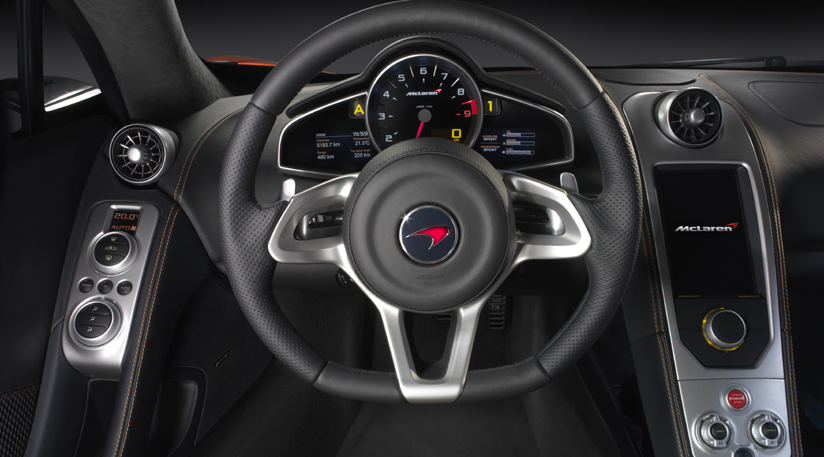
So leaving all that aside.. heres to the successor. The McLaren MP4-12c. Harldy a name that’s easy to remember….. bt definitely not the type to forget if you see it once. Sit back and scroll through its beauty.


So let me put out an obvious fact onto the table. When you call a car a successor of a legend, you will obviously be expecting it to perform…well….. beyond expectations…ya.

The McLaren F1 was the ultimate road car that was the peak of performance for its time. As for the little one….. does it work its way beyond expectations…………. Lets find out shall we.

Starting with the basics

Name: This is how they put together the name for this car

  • 'MP4' has been the chassis designation for all McLaren Formula 1 cars since 1981.
  • From 1981 to 1996, McLaren's title sponsor was Marlboro, the "M" stood for this.
  • Ron Dennis' Project 4 at the time was for the design for F1 cars.
  • The '12' refers to McLaren's internal Vehicle Performance Index through which it rates key performance criteria both for competitors and for its own cars. The criteria combine power, weight, emissions, and aerodynamic efficiency. The coalition of all these values delivers an overall performance index that has been used as a benchmark throughout the car's development.
  • The 'C' refers to Carbon, highlighting the application of carbon fibre technology to the future range of McLaren sports cars.

Engine: 3.8 L Twin Turbo V8 (592 Hp). This is the first ever engine built by McLaren in collaboration with Ricardo Plc UK.

Class: Sports Car

Transmission: 7 Speed Dual clutch gear box

Top Speed: 322 kmph+ ( 200 mph+)

0 to 200kmph (124mph): 8.9 seconds

Seating Structure: 2 Seater


Hmmmm first impressions (if you exclude the visuals of the car). Not very great now are they. They are down from a 6 litre V-12 to a 3.8 Litre V8. Top speeds down from 391 kmph to just over 322 kmph. So is it just the looks, the modernization and styling that this successor of a legend has got??

The answer is Yes & the answer is also No

Yes, because Duhhhh…its got some awesum styling and No because this car is different from his daddy. This car goes beyond expectations when it comes to Technology.


Chassis

Starting with the chassis. Very basically this car uses a Carbon MonoCell tub ( seen in the centre of the picture) This type of design means that the driver get the same security that and F1 driver gets and also at a much more less speed. The real punch here is that this carbon MonoCell tub was designed to be built in just 4 hours as opposed to 4000 hours it usually takes to build similar chasis for other cars.


Gearbox

Consists of a dual clutch mechanics. How this basically works is that there are 2 clucthes in the gear box. Say you are driving in the 2nd gear. The driver has the option of lightly tapping the paddle to chose the next gear he wants to go into without actually going into it. Tapping lightly mean that the gear box is preparing itself to optimally switch into the next gear. So if you are going in the 2nd gear and you tap the ‘gear up’ paddle. The second clutch put the car into 3rd gear and wait for you to actually switch. Thereby reducing the switching time.


Reduced Weight

The car is also made super light by finding ways to reduce weight in basically the most unimaginable places. Therefore this car having a smaller engine it means that it has a greater power to weight ratio (This is something im actually looking forward to write about in the future. So KEEP IN TOUCH) .

The Suspension

Suspension is designed with the use of a sort of changeable roll bar system (Once again I will talk about this extensively…perhaps dedicate a whole post to suspensions alone). This actually means that on cornering the roll bars work, firming the suspension and on straight sthe suspensions eases up giving the car a smooth and comfortable ride.


Driver Control

In terms of driver control. This is a car that will actually win you a race not with its ability to go fast, but with its ability to take corners. You take a ferari 458 ( which is actually this cars direct competitor) agiast this on a technical track this will win by miles as opposed to a drag race situation. One of the technologies that help this car win is called the “Rear inside Wheel Braking system”. How this works is when you are entering a turn at speed the rear inside types brakes get applyied preventing the car from understeering onto the opposite wall. Therefore you can actually move intoa corner faster, hence move out faster as well.


So has this car lived upto its grandfathers reputation. Yes id say so, in its own silent way.


Some TV review programs show the car as being too technical/ technologically oriented since it doesn’t allow the driver skills to actually take over and drive. I may not have driven this car but I think that fact might just about be true, but im not so sure. The reason why I agree is different. I agree to the fact because if you own a car like the McLaren F1 you have to have absolutely no fear of Death to drive it to its maximum. You might think you are not afraid of dying , but you’ll soon realize exactly how fond you are of youself when you get up to the speeds that a car like the F1 can do.


But in this car, it takes in the fear for you and gives you the opportunity to throw a car into a corner at high speeds, it erases the faer factor from the car.It allows you to behave like a real racing driver and drive like one.


And for that reason this car has my respect.


For more info on the MP4-12C visit the official page on the link below:

http://www.mclarenautomotive.com/uk/p11/explode/default.aspx#/p11/explode/


Thursday, January 12, 2012

The Grand Father & Son

I call it the grandfather because this car is a unique one of a kind masterpiece, and I think I am right if I say truly one of a kind in every way. It was the first of a series of cars which were built to break the top speed barrier for road legal cars.

It is none other than, the McLaren F1.

I haven’t really done it any justice as such in what I have said above. You might have read in one of my previous articles (IF YOU READ IT -_- ) I called the McLaren F1 the father of all Hyper cars. I haven’t really gone in depth on the McLaren, so here you are.


CAUTION: There is quite if lot of engineering jargon in relation with this car and sometimes I MAY have no CHOICE but to use them. So if you Don’t Understand anything the first time. Not to worry I didn’t get it the first time either.


Alright, shall we begin, …………………

Butttt...... where to begin is the next question. I had to do a bit of research into this actually to really pull out where McLaren began. I’m however still not sure if this is how things actually came out. Never mind the tiny details, so here goes.


Bruce Leslie McLaren (30 August 1937 – 2 June 1970), born in Auckland, New Zealand, was a race-car designer, driver, engineer and inventor. He established the McLaren Racing Team in 1963. The Team was later bought by a certain Ron Dennis, who later formed the McLaren Group which included the F1 Racing Team, McLaren technology & of course McLaren Automobile. And our story starts at McLaren Automobile in 1992, when chief engineer Gordon Murray got the backing for his idea of building the ‘Ultimate Road car’.


Step by Step Here’s how the car was put together.


Step 1: The Beating Heart – Engine

The requirement was to give the driver the maximum control over the car. This meant that the engine had to be naturally aspirated (i.e.: NO TURBO or SUPERCHARGERS). After initially searching with Lamborghini, Ferrari etc. Gordon finally turned to Honda who were building the Engines for the McLaren race cars to accept to build the engine for the McLaren. But they refused. Therefore the winning engine came from BMW. Specs are as follows


Engine Name: BMW S70/2

Capacity: 6.1 Liter V12,

Power Rating: 618 Horse Powers @ 7400 rpm. Rev Limited @ 7500 rpm

Power to Weight ratio: 550 Hp/ton

Fuel consumption: Worst – 3.9 km/liter
                               Best: 9.9 km/liter


Ok so what makes it unique?


All the cars which came after this, all the cars/ engines which were able to break past the 390 kmph mark barrier all had to be Turbo charged or super charged. Not one of those cars could beat the McLaren without a turbo charger on it. If you want to build a car that goes fast there were 2 things you could do.


  • You build a ridiculously Powerful engine. E.g.: Bugatti 8.3 L, Quad Turbo Charged, W 16. With weight of 1888 kg. giving a power to weight ratio of 530 hp/ton


  • Or you build a supper light car. E.g.: The SSC Aero 6.0 L Supercharged V8. With weight of 1292 Kg, giving a power to weight ratio of 1003 hp/ton.


McLaren had none of these complexities, Yet it produced more than any of those cars could produce 15 years before they were made. Way ahead of its time.


Step 2: The Book & its Cover - Chassis & Aerodynamics

The whole underlying structure of the car was built off carbon fiber reinforced plastic (CFRP) monocoque chassis structure, except the engine bay area. The reason being that carbon fiber when exposed to heat loses its strength over time. Plus the BMW engine produced a massive amount of heat. Therefore the engine bay area was lined with the best heat insulator available. GOLD FOIL.


In terms of aerodynamics once again used ingenious techniques to keep the car on the ground. The best way I think to explain aerodynamics is to break it down to you in numbers. So what they use to (in a sense) measure aerodynamics is called the Drag Coefficient. The lower this number the better. Putting some figures on the table. This is what it looks like:


Bugatti Veyron: 0.36

SSC Aero: 0.357

McLaren F1: 0.32


Very low ehh!!


And how they managed to get that is simply genius. At the bottom of the car they set up some fans. That’s Right Fans. In essence what they do is this. The suctions fans suck in the air at the bottom of the car creating a low pressure situation, creating a high pressure situation on top of the car. So naturally the car is pushed down and is... well kept there. The air sucked up from the fans are used to cool and the engines and the brake systems.

Also the rear spoiler is made to tilt under braking creating a more drag therefore shortening down the car faster. The air displaced when the spoiler tilts is also put into use by sending them downwards to cool the rear brakes


Talk about aerodynamics, That’s just Nuts :O


Step 3: Feather Bed – The Suspension

The McLaren being built as a road car had to consider the ride comfort as well unlike when building a GT car where comfort, is well immaterial. Because of this the suspension system had to have some innovations, the most interesting of all is this being. The suspension is positioned horizontally which in essence allows the wheels to move backwards when it hits a bump increasing comfort. They found away to do this without losing any of the control the car has.

Also the McLaren is built such that there is perfect balance of the car. This is one reason the drives seat is put in the middle to keep the Mass at the center of the car. Also The weight is distributed such that 58% goes to the back and 42% comes to the front. All this is controlled by a computer to avoid any unwanted weight transfers.


Step 4: Heaven – The Interior & Equipment


Besides all that the McLaren has all the comforts that any car will have. Air conditioning, CD player & Central locking is a few things included in this car. Unlike some cars today which have to have all these comforts removed and the interior striped to a bare minimum in order to get speed, (SSC Aero), the McLaren achieved its unbelievable speeds with every bit of comfort to the driver.


See Below Videos for McLarens Top Speed Run- At the one of the only place on earth that you can max out a McLaren. At the VolksWagon test track 'Ehra-Lessien' near the east german border in Germany.


Acceleration


0-30 mph (48 km/h): 1.8 s
0–60 mph (97 km/h): 3.2 s
0–100 mph (160 km/h): 6.3 s
0–124.28 mph (200.01 km/h): 9.4 s
0–150 mph (240 km/h): 12.8 s
0–200 mph (320 km/h): 28 s


Top Speed

With rev limiter on: 231 mph (372 km/h)
With rev limiter removed: 242.96 mph (391.01 km/h)


22 Years after the death of the McLaren founder his spirit lives on in his car. Don’t think so ???.


The below quotes is from the book ‘From the Cockpit’. Read it and see if the Car doesn’t fit into those lines.


"To do something well is so worthwhile that to die trying to do it better cannot be foolhardy. It would be a waste of life to do nothing with one's ability, for I feel that life is measured in achievement, not in years alone. – (Bruce McLaren, 1964)


 And an Achievement it was.


And what of the son???? .. ….Well that’s a different story entirely …..


To be continued…………….