Wednesday, March 28, 2012

The Anatomy of the Engine - Part 1

2 Very Simple question every petrol head or a person aspiring to be a petrol head should know the answer to.

1. Do you know how a basic engine works? What are its In’s & Out’s?

2. Do you know how many types of engines exist?


I might very well be insulting your intelligence by asking these questions, but come on, I'm pretty sure there will be a thing or two in this post that you will learn for the first time :)

So Happy Reading.....

Question Number 1

Ladies ( if any are reading this.. Hopefully they are..) & Gentleman.. Here’s to the basic functionality of the Four stoke engine. 


Sub- Section 1 - The Anatomy of the Cylinder

If you may, please direct your attention to the image to your immediate Right.

You might notice the lettering and the colouring on the different parts of the diagram.

 If you keep track of these colours you'll pretty much understand how the engine works.

The basic concept of an engine is to create a force large enough to move it self + anything else we might put onto it. So how does it create movement by using Petrol. The answer is an "EXPLOSION". Yes a series of "CONTROLLED" explosions move the car forward

I (Blue) - The intake valve, which sucks in cold air into the piston chamber

S - The Spark Plug used to trigger the explosion to burn petrol

E (Red) - The Exhaust value, used to take the waste gas after the burning of petrol away from the piston chamber

P (Yellow) - Is the piston, Movement is vertical ( Up & Down)

C (Purple) - The Crankshaft- This is connected through the gear box to the wheels

W (Green) - Water takes away the unwanted heat generated by the explosion of petrol to the outsides of the car.

Grey Area - Cast Iron/ Steel/ Aluminum Engine Block 

Understood the basic anatomy of the engine???

Now lets move to the Next Sub Section

Sub Section 2 - How it Works

Very basically how it works is in a 4 step process called a 4 stroke cycle.

OK lets begin with STROKE 1

Stroke 1- (Piston Movement Top to Bottom) The Piston moves from Top to Bottom of the Cylinder. The Intake value is left open when this happens. The result, a cold mixture of gaseous petrol & air is sucked in from outside as the piston moves down. When the piston reaches the bottom of the cylinder it is full of the mixture. Now its ready for Stroke 2

Stroke 2- (Piston Movement Bottom to Top) The intake value is now closed. The Piston moves upwards compressing the Petrol air mixture to a tiny space as shown in the figure.

Stroke 3 - (Piston Movement Top to Bottom) The Spark Plug fires a spark and BANG!!!!!. The Spark causes the petrol air mixture to explode casuing a sudden expansion of gases exerting a massive power inside the cylinder. The force results in the movement of the only movable part inside the cylinder (The Piston) to move downwards making the crankshaft turn & deliver power to the wheels.

Stroke 4 - ( Piston Movement Bottom to Top) The Exhaust Value opens and as the piston is pushed upwards the exhaust gases leaves the chamber as the piston comes to the top and the exhaust value closes.  Now its ready to do Stroke 1 again.

Theses four strokes combined is athermodynamic cycle called "Otto Cycle". The cycle continues over and over and over again at a speed enough to create thousands of revolutions per minute.


Sub Section 3 - Functionality Aids


Basic Air Filter Location
Ok.. Since we talked about what happens inside the Engine... Lets talk about other basic functionality which helps an engine work, Starting with how the air gets into the engine.


The atmosphere around us is filled with dust particles and basically all sorts of stuff which can cause damage to the engine. The best way to prevent this is to ensure that the breathing system of the car is fixed to an air filter. Every car has air filter.


Carburetor

So once the air gets filtered in through the air filter, it then has to be mixed in with petrol in order to form the explodable formula. This job is done by a carburetor. The petrol is atomized into the air in the carburetor to form the petrol air mixture, which is then fed into the intake system. In modern day cars however they use a system called EFI (Electronic Fuel Injection System), where the petrol is injected into the intake pipe just before the entrance into the cylinder and atomized there.This method is actually more fuel efficient.


Spark Plug
The spark plug is the ingenious device which creates the spark that causes the explosion in the engine. Its kind of like the detonation switch in a bomb. Seems like a easy process yeah.......Not really. The park plug actually needs a voltage of at least 10,000 volts to create a  spark. So considering that our mains only carry a voltage of 240 volts which is pretty much enough to shock us or even kill us, I don't think you'd want to go near a spark plug..

Dangerous fellows those spark plugs...


Distribution Hub


So the 10,000 volts actually begs another question, Where does all this power come from?? If we were to trace our steps backwards from the spark plug we will be going along high conductible wires to something called a distributor. This is where the power is divided into separate wires for each cylinder spark plug. If you take a peak under you bonnet its actually the heavily insulated pieces with thick black wires coming out of it. The distributor is connected to the alternator which is kind of like a dynamo that generates electricity when the engine is turning.


Alternator

Radiator
Water Pump
On explosion the engine only uses 25% of the energy stored in the petrol to move the car. The other 75% is turned into heat. That actually is quite a lot of heat, which if left without doing anything could pretty much melt the engine. So the heat should be taken away continuously. How??.. The answer is water. The engine block has holes in it specially designed to help take the heat by transferring the heat to the water, which is sent to something called a radiator. This is actually one long lead pipe bent and compressed into a tiny area and then given fins to look like kind of a grill. The logic is that the water takes sometime to pass through this grill as there is pretty much a long distance for the water to travel. During this time a fan is used to blow air onto the radiator cooling the water inside the pipes over a period of time such that the water that comes out the other end of the radiator is actually cold water which is then pumped using a engine driven water pump back into the engine to take the heat out again.


Question Number 2

I think you had enough for today. So...
Another Day, Another Time.....


Wednesday, March 21, 2012

Honda - The Success Story


 Since its founding in 1948 Honda has evolved into one of the largest diverse companies in the engineering sector producing over 14 million internal combustion engines a year. Honda was the first to release the a Luxury brand, Acura in 1986. Honda is currently the sixth largest car manufacturer globally. In 2007 the geographic revenues of Honda were as follows:


Honda's Total Revenue by Geographic Region  (in millions of ¥)

  • Japan -1,681,190 
  • North America - 5,980,876
  • Europe - 1,236,757
  • Asia - 1,283,154
  • Others - 905,163

Honda’s core business is considered to be motor cycle. But they are very much existent in other manufacturing fields such as garden equipment, marine engines, personal watercraft and power generators. Much more importantly is the futuristic scope that Honda has with its consistent involvement in the fields of aerospace aviation and in the field of artificial intelligence driven robotics. Honda is also a prominent Formula one car manufacturer and racer until 2008 when they quit due to effects o the global economic crisis.


So that is Honda as it is today (in very short detail ofcource). If you thought that I might be talking about a Honda car today, well.... you are wrong. 

This week I thought of going in a different direction. To be more precise a Direction of Inspiration. The reason I gave the present scenario of Honda was to give you proof of how one mans determination not to give up…….. can show you what a True Winner is...

 As of today everyone knows what Honda is what it does. Many people use a Honda car or motor bike or any other piece of equipment without knowing the real story behind how challenging it was for Mr. Soichiro Honda to establish Honda Motors.


Like most other countries, Japan was hit badly by the Great Depression of the 1930s. In 1938, Soichiro Honda was still in school, when he started a little workshop, developing the concept of the piston ring.

His plan was to sell the idea to Toyota. He labored night and day, even slept in the workshop, always believing he could perfect his design and produce a worthy product. He was married by now, and pawned his wife’s jewelry for working capital.

Finally, came the day he completed his piston ring and was able to take a working sample to Toyota, only to be told that the rings did not meet their standards! Soichiro went back to school and suffered ridicule when the engineers laughed at his design.

He refused to give up. Rather than focus on his failure, he continued working towards his goal. Then, after two more years of struggle and redesign, he won a contract with Toyota.

By now, the Japanese government was gearing up for war! With the contract in hand, Soichiro Honda needed to build a factory to supply Toyota, but building materials were in short supply. Still he would not quit! He invented a new concrete-making process that enabled him to build the factory.


With the factory now built, he was ready for production, but the factory was bombed twice and steel became unavailable, too.


Was this the end of the road for Honda? No!

He started collecting surplus gasoline cans discarded by US fighters – “Gifts from President Truman,” he called them, which became the new raw materials for his rebuilt manufacturing process. Finally, an earthquake destroyed the factory.


After the war, an extreme gasoline shortage forced people to walk or use bicycles. Honda built a tiny engine and attached it to his bicycle. His neighbors wanted one, and although he tried, materials could not be found and he was unable to supply the demand.

Was he ready to give up now? No!

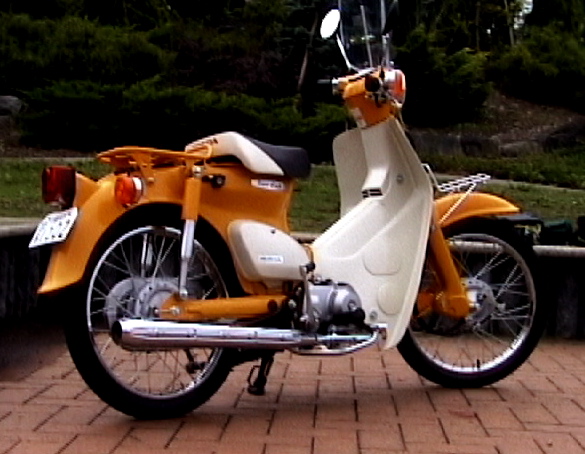
Soichiro Honda wrote to 18,000 bicycles shop owners and, in an inspiring letter, asked them to help him revitalize Japan. 5,000 responded and advanced him what little money they could to build his tiny bicycle engines. Unfortunately, the first models were too bulky to work well, so he continued to develop and adapt, until finally, the small engine ‘The Super Cub’ became a reality and was a success. With success in Japan, Honda began exporting his bicycle engines to Europe and America.

End of story? No!


In the 1970s there was another gas shortage, this time in America and automotive fashion turned to small cars. Honda was quick to pick up on the trend. Experts now in small engine design, the company started making tiny cars, smaller than anyone had seen before, and rode another wave of success.


Today, Honda Corporation employs over 100,000 people in the USA and Japan, and is one of the world’s largest automobile companies. Honda succeeded because one man made a truly committed decision, acted upon it, and made adjustments on a continuous basis. Failure was simply not considered a possibility.


So …........... you think success has eluded you because you failed a few times… 
.
.
.
.
.
Mr. Soichiro Honda says “Think again” 


Wednesday, March 14, 2012

2013 - Agera R


Switzerland!!!! Very much popular in the world for its chocolates, watches and the Swiss Alps.. I don’t know what else it has but it’s a definitely not a country that produces cars. So out of my interest radar with the exception of when it comes to chocolates ;) & more importantly when it comes to the Geneva Motor Show. The funny fact is that the most exciting of cars are almost always unveiled at the Geneva Motor Show and sure enough this times motor show turned many heads with the likes of the New Aventador J and the V-12 Zagato.

Lamborghini Aventador J


Aston Martin V-12 Zagato


But what really caught my eye was the new 2013 Agera R. Feast your eyes on its beauty


The real reason as to why this car caught my eye was not its beauty but it was actually what lay within. Sounds very romantic ehh. ;) well it is actually. This car is actually a carbon fibre piece of art. Im not one for art but this has got to fall into that category. Here’s why.

Starting with the Heart of the Beast: The Engine


Koenigsegg Aluminum 5.0L V8, Twin turbo superchargers
Carbon fiber intake manifold with optimized intake tracts.

Giving out

  • 1140 hp at 7100 rpm - redline @ 7500 rpm
  • With a torque of over 1000 Nm from 2700 to 7400 rpm

That’s a nasty bit of power for a V-8 & its not a engine brought in from some other manufacturer and put in together, buts it’s been built at Koneigsegg itself. So these guys know exactly what they are doing right down the nuts, the bolts and the welds in that car.


The Belly of the Beast: The Transmission


Specially developed 7-speed dual clutch, 1 input shaft transmission with paddle-shift. Electronic differential.

The Limbs: Brakes & Wheels

Front brakes

Ventilated ceramic discs
6-piston calipers.
Power-assisted.

Rear brakes
Ventilated ceramic discs
4-piston callipers
Power-assisted.

Wheels: Koenigsegg AicoreTM carbon wheels with centre locking

This thing actually has carbon fiber Rims. More stunning is that its hollow making the rims super light weight… I got to say Good Stuff!!!

Traction Control:  F1-style for optimal performance with 5 different handling modes. Specifications Agera R


The Skeleton : Chassis

Carbon fibre with aluminium honeycomb and integrated fuel tanks.

Weight including tanks

70 kg.

:O

The Muscle: Front and Rear suspension

Double wishbones, two-way adjustable gas-hydraulic shock absorbers, pushrod operated. Triplex damper in the rear. Electronically adjustable ride height. Front Cro-Mo subframe, with integrated crash members.

Rear

Semi-stressed engine and gearbox with support struts, for needle bearings and o-ringed wishbone bushings optimal rigidity and no engine inertia movements.

Fully machined aircraft aluminium uprights, with SKF LeMans specification 150mm angle contact ball bearings. GKN hollow/gun-drilled driveshafts.
Koenigsegg Z-style progressive and lightweight anti-roll bars front and rear.

The above bit is straight off the koneigsegg website so its actually got some prety complicated stuff, but the complicated 'Stuff' serves a very important specific pupose ...which will find if you keep reading ;)


The Skin & Hair: Equipment


  • Dual airbags
  • Detachable storable hardtop with glass roof Power windows
  • Adaptive rear wing
  • Adjustable pedals and steering column
  • Agera stitching
  • Adjustable seats in rake and length
  • Carbon ceramic brakes with Sport ABS Hydraulic lifting system
  • Power brakes
  • Extra 4 point seatbelts for track use
  • Satnav
  • MP3 player
  • USB connection
  • Climate control
  • Digital warning and info system
  • G sensor
  • Tire monitoring system
  • Silver key
  • Leather carpets
  • Rear view camera.


So its got some super high tech stuff behind it & the comforts and luxury of a Mercedes S- Class.
So what does this all give in the end. The numbers speak for themselves.. Take a look.


Acceleration

0-100 km/h (0-62 mph): 2.9 sec

0-200 km/h: 7.5 sec

0-200-0 km/h: 12.3 sec,

0-300-0 km/h: 21,19 sec

Braking distance

30.5m (100-0 km/h)

Top Speed: 440 kmph :D


Ahhhh.. Thats why this car turned my head away from the Zagato's and the Aventador J's

This car is 9 kmph more than the current record holder the Bugatti Veyron Super Sport. This is actually the theoretical top speed taken off calculations. We will know for sure very soon though once they perform a proper test. But regardless wheather this car achieves this feat or not ......this car can definitely be classified as one of the higher end Hyper cars.
So its definitely one of the cars you’ll find in my garage….. some day … yes some day ;)

Tuesday, February 21, 2012

The Next Step.... The Fuel of the Future!!!!

  • Each year around 77 million cars are produced worldwide whit china taking the lead with 18 million units a year.
  •  By the year 2007 there were around 806 million cars & light trucks on the road on the road (If kept bumper to bumper this is enough to circle the globe a 100 times) 
  • These 806 million cars consume around 260 billion gallons of petrol and diesel yearly.


This in turn would mean that a quarter of the oil ever consumed on earth was done so in the last 15 -20 years. All these facts can’t help but beg one question….


How long do you think it will all last??


For many years now the debate has been ongoing as to what the future will hold for us. And in terms of automotive industry what will we be using to power our cars. I made it a personal goal to explore the options open to us. Now these alternatives may be either low emission or emission free. But one type of fuel stands a good chance to fight for prestigious award of 0% pollution…….


The Fuel of the Future….


The answer is...

HYDROGEN..

I mean think about it. Hydrogen is the single most abundant type of resource (if you are willing to go that extra mile to call it a resource) not in the world, in the whole UNIVERSE!!!. Our biggest star the Sun uses hydrogen in nuclear fusion to produce massive amounts of energy and helium as a byproduct. Here on earth hydrogen can react with oxygen to give out the same amount of energy as petrol with the only waste being water. I mean it’s the best possible thing right…


However hydrogen does have one drawback. Although hydrogen is a renewable resource it is not available in its pure form. In other words hydrogen is always available combined with other elements which would mean that to get to hydrogen you actually have to spend energy on retrieving pure hydrogen.


OK since we got that cleared currently there are 2 ways in which hydrogen can be used to power cars. One would be to use the normal petrol engines with a few changes (YES…we can do that…..YAY…this would mean that we can preserve most of the experience of a hunky petrol engine) and also fuel cell driven cars, which are basically electric cars (BORING!!!!!!.... seriously guys there is a bigger problem at hand, so bear with me). But you see although hydrogen can be used in cars very effectively to power them, there are 2 problems with it.


  1. Manufacturing
  2. Storage & Distribution


Manufacturing.

In terms of manufacturing the usual process for hydrogen manufacturing would be electrolysis. This involves the passing of an electric current through water. This process produces hydrogen at one end and oxygen at the other. However there is a drawback with this process as well. The process of electrolysis uses electricity. Which has to be taken off the electricity grids. As of today most of the power generated is through the use of fossil fuels. So in using hydrogen there is still ascertain amount of green house gas emissions taking place. The ideal solution for this would be to switch to renewable sources for power generation such as Geo Thermal, hydro electric, solar or wind as quickly as possible. Or even switch to hydrogen power plants ( I’m not very sure about the possibilities of this)


Storage & Distribution

Hydrogen unlike petrol is a gas. (DUHH!!!.. yeah I know.. I said that to make a point so listen up) so you can’t use pump to move the hydrogen from one place to another you actually need a pressure difference (a high pressure to low pressure scenario). Therefore hydrogen has to be stored under pressure.

It terms of transport for a few kilos of hydrogen it can be transported in gas tanks. But for commercial volumes hydrogen has to be converted to its liquid form which means it has to be maintained at a very very very low temperature…. And that is a hard thing to do. So the only available solution is to produce the hydrogen on site on demand. Eg: When you pull up into a fuelling station to fuel your car you usually ask for a certain amount of fuel right. So the hydrogen actually has to be produced by the dispenser at that moment itself, thereby eliminating many of the costs involved in it.


So if the technology is readily available to use and produce hydrogen why isn’t it being used already??


For the answer we have to move back to the 1940’s


Fueling Stations and mass car production both evolved together. So over decades the safety the procedures the infrastructure etc has evolved solely to support the distribution of petrol & diesel. So obviously the change to hydrogen cannot happen overnight. Petrol cars and Fueling Stations both evolved together.


In the case of Hydrogen. It’s like a chicken and egg scenario, both have to evolve together. So car manufacturers have to start producing hydrogen driven cars as well as Fueling Stations should start selling hydrogen.


All that is fine. But there is a bigger question bothering me.

What does the Future hold for the Fuel of the Future??


The BMW Hydrogen Engine


Note: Feel free to leave comments on what you think might happen in the future.